23rd November 2026 – BRATISLAVA, Dvorana Concert Hall, VŠMU
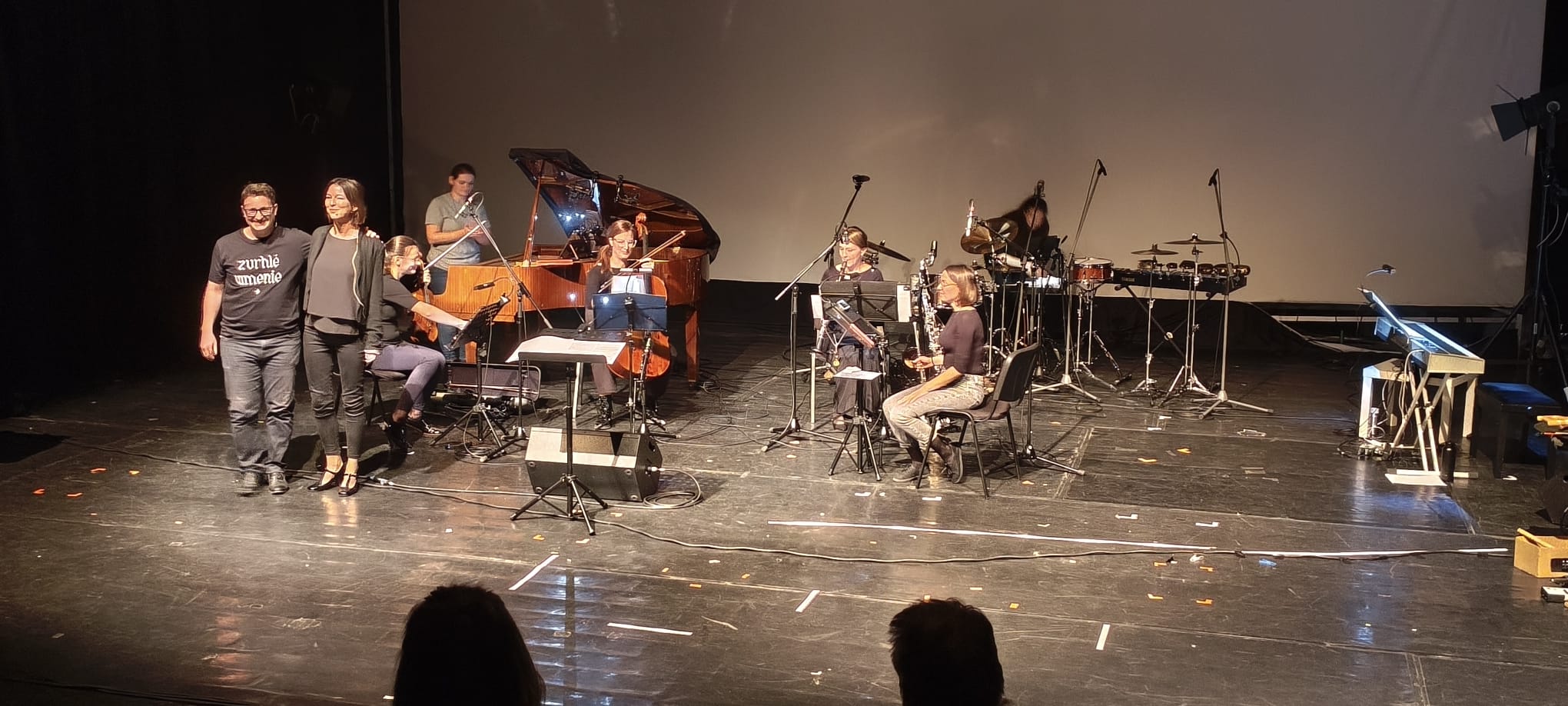
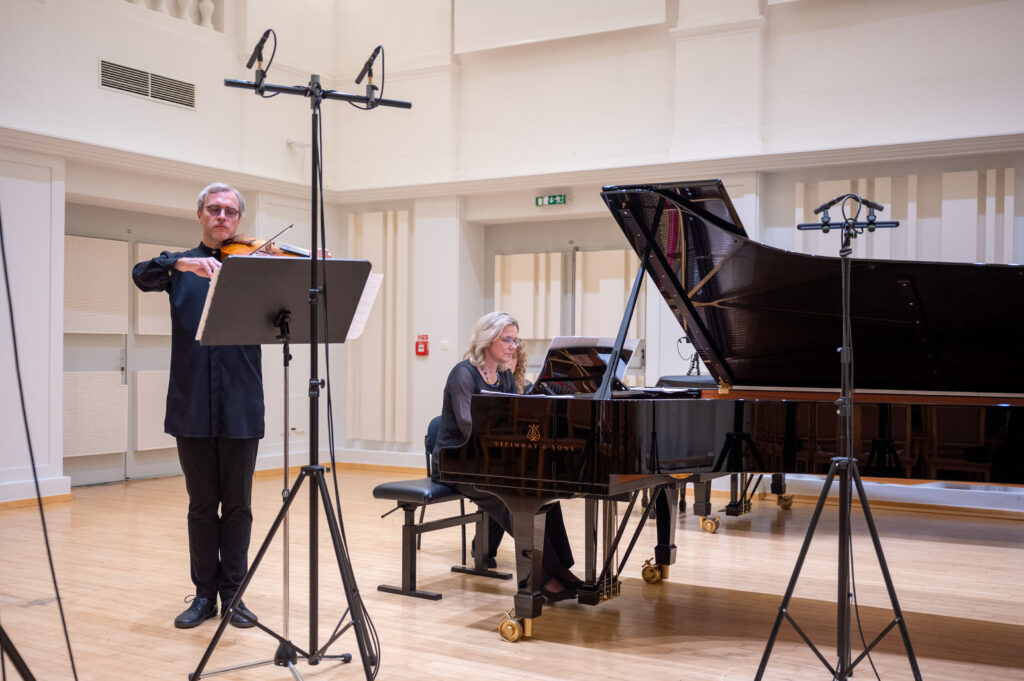
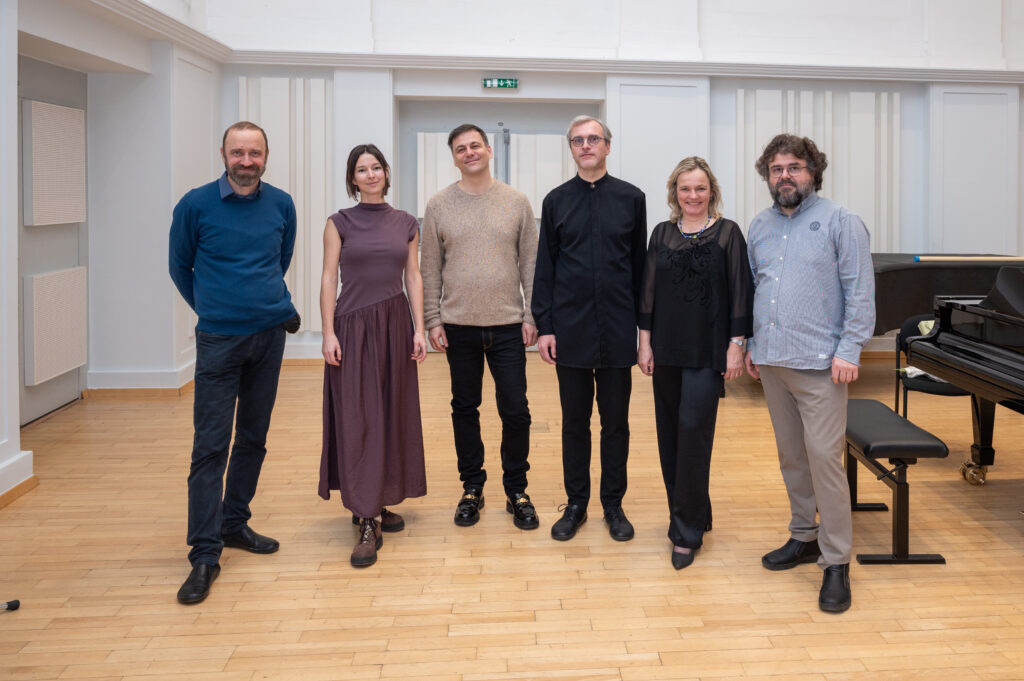
The last of the three main concerts of the 34th edition of the New Slovak Music Festival belonged to the viola and piano duo of Peter Zwiebel and Janette Katinová. Owing to funding difficulties, the Slovak Composers’ Association gave the 2026 edition a more chamber-sized format, three regular concerts held in the Klarisky Concert Hall and in the Dvorana Hall of VŠMU. To these were added a guitar recital by Adam Svitač and a concert by the Vox Cantoris choir announced for April 2027. The programme at Dvorana comprised six works by three generations of Slovak composers.
The evening opened with Summit of the intersection lines by Barbora Tomášková for solo piano. The piece draws on the surrealist space of Yves Tanguy and on the image of parallel lines that meet outside the space we know. In the piano part the two lines stay close to one another without merging, and Katinová set them apart by alternating energetic and lyrical planes. The rhythmic incisiveness that carries the piece returned once more during the evening, in Iršai’s Precipitato. Into To the Unknown Voice Ivan Buffa placed a memory of his grandmother, who guided his first steps at the piano, and of the composers Roman Berger, Jozef Podprocký and Viera Janárčeková. The work consists of three connected sections. The opening viola solo emerges out of silence, the middle section disperses fragments of the grandmother’s lullaby into wide intervals across the entire register of the viola while the piano encircles them with a chain of tones concealing an all-interval row, and in the final section the fragments turn into harmonics. Zwiebel led the viola part with the bow circling on the strings and with pure high positions, Katinová the piano chain without a break. With every return the accompaniment sounded denser and encircled the viola line more tightly. The questioning character of the piece never grew heavy-handed; the violist carried it with absolute lightness. Ciaccona by Mirko Krajči draws on the high Baroque. The work begins melancholically and songfully, and the melodic writing, at first led alternately by sustained tones and pizzicato, gradually swells as the tempo quickens. Zwiebel’s elegant and technically precise playing preserved the singing quality of the melodic line even in the virtuosic passages.
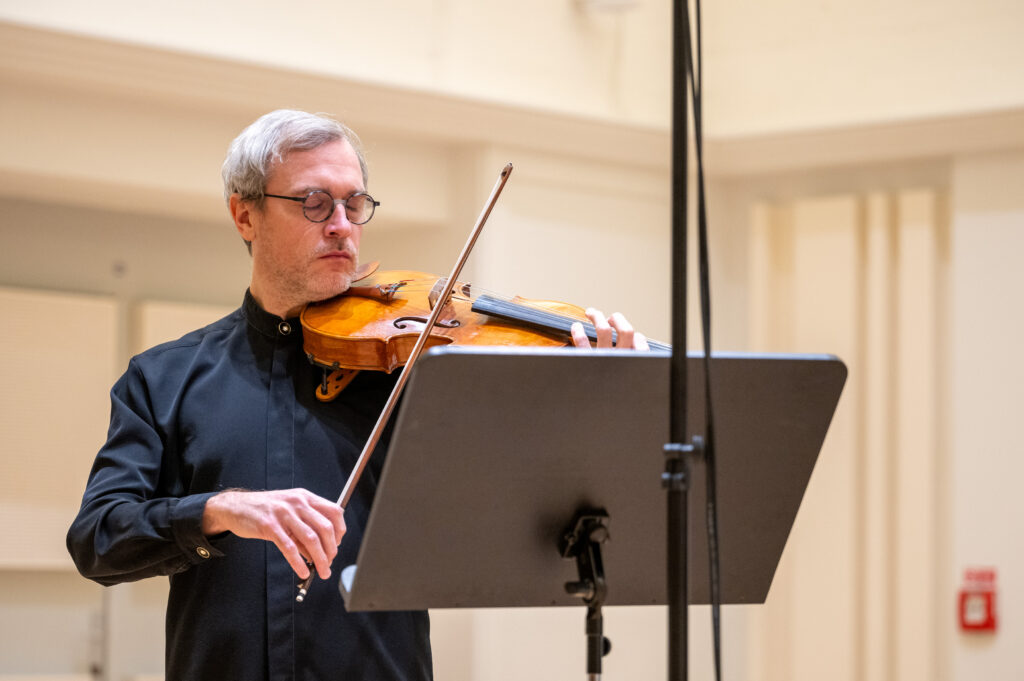
La Vita Nuova by Lukáš Borzík grew out of the composer’s reflections on the Old and New Testaments, its motto a line from Dante’s collection of the same name. The first movement, Largo estatico ma intimo. Affettuoso, begins with a hazy introduction without firm harmonic anchoring, beneath the melodically led viola the piano moves into a minimalist passage close to the procedures of Philip Glass, and the end of the movement brings the first genuinely tense plane. The second movement, Largo pietoso e con anima, has the character of contemplation, with a motif of hesitation passing between viola and piano and growing more urgent with each permutation. The third, Deciso e spiritoso. Quieto e mistico, enters rhythmically and almost in march style, only to settle at the close with the tapping of the bow on the strings and the return of the motif from the first movement. I cannot but single out the brilliant ensemble playing of the two performers, their precise entries without the slightest hesitation. Precipitato by Jevgenij Iršai rests on an energetic section with constant rhythmic and metric changes, to which the composer returns throughout the work. Katinová played these passages very precisely and with assurance, though the massive chordal planes called for more sound. The second type of material was a recurring figure, a chord broken downwards in the low register and ending on a repeated tone, which came back transposed each time. It was followed by tapping on the key without the string sounding. The pianist also handled remarkably well the slow run-up back into the rhythmic section, where the tempo increased gradually and without the pulse wavering for even a moment. The programme was brought to a close by Podstata vône (The Essence of Scent) by Peter Machajdík. The piece is a tribute to the scent of the forest after rain, to the aroma of flowering meadows, herbs and fresh earth, and instead of motivic work it builds on colour and texture. The viola sounded warm and velvety, the piano creating a luminous space around it with shifting moods. Katinová’s hands fairly floated over the keys, Zwiebel’s viola line remained gentle and calm.
The relationship between the two instruments took different forms across the programme. In the works of Buffa and Machajdík the piano encircled the viola line, in Borzík’s the instruments passed the melodic line between them. The pieces by Tomášková, Krajči and Iršai, in turn, let each instrument stand on its own. The balance of this consonance was the achievement of both performers, who approached six different compositional poetics with precision.
Hana CHLEBÁKOVÁ