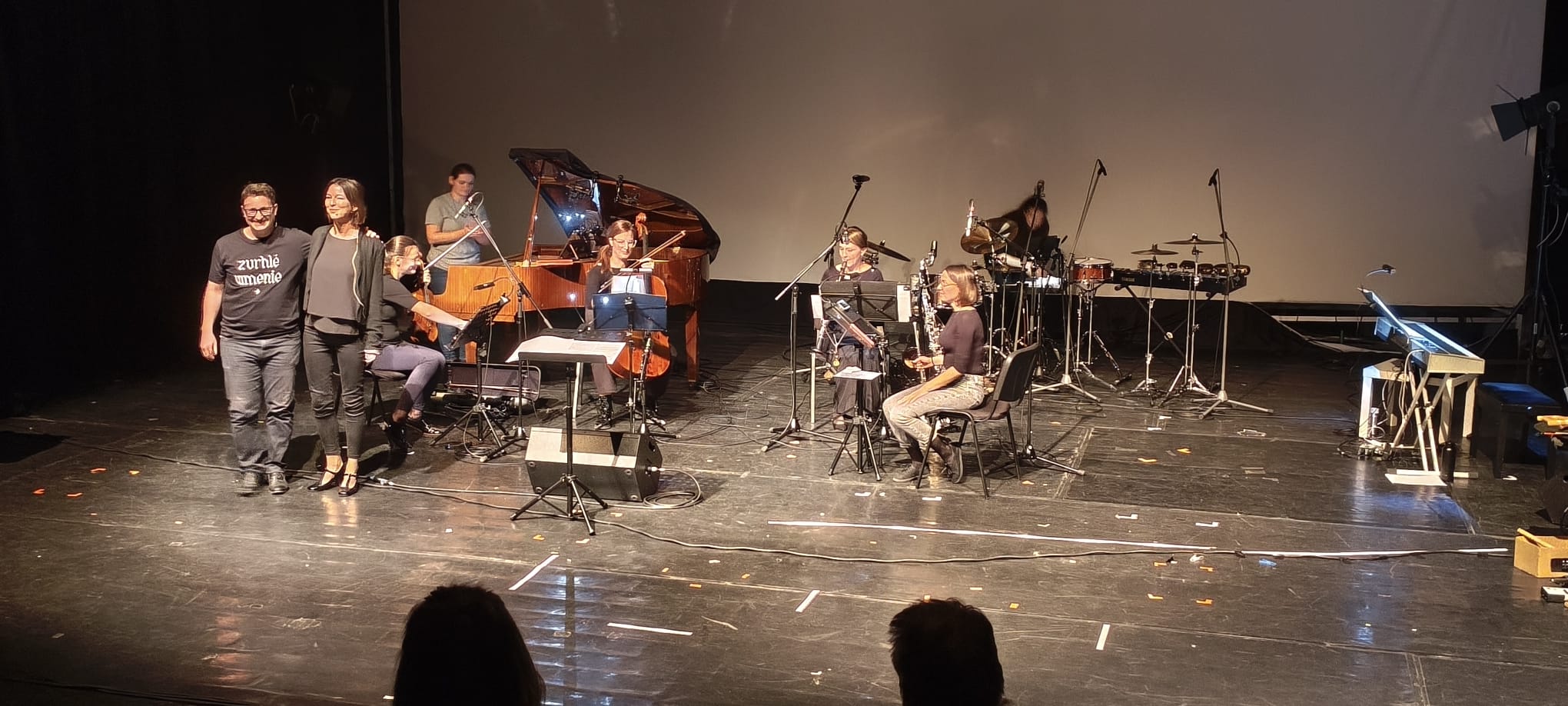
9th October 2026 – BRATISLAVA, Concert Studio of Slovak Radio Building
What happens when an entire musical idea has to fit into just a few minutes? The short form allows neither a run-up nor a digression, and compositional principles are revealed in it at their most vulnerable. It was on precisely this fragility that Ensemble Ricercata built the whole evening. The programme, made up of works from various styles and periods, was united by a tendency to view music as material that can be tested and taken apart down to its smallest components. In my view, the dramaturgical concept of the concert rested on the miniature appearing in several different guises.
In the first half, the miniature appeared first as a quotation. Paul Hindemith’s Ragtime is based on Bach’s Fugue in C minor, whose subject stood out beautifully, though the ragtime undertone somehow got lost in the acoustics of the hall. Claude Debussy’s Lindaraja, in turn, brought the ostinato rhythm of the habanera and gave the evening a rhythmic lift. The challenge of both miniatures was to keep the quoted material legible and not let it tip over into parody. Pianists Ivan Šiller and Tomáš Boroš kept this balance well in hand and rendered the pieces with precision and skill.
The miniature took another form as a laboratory, in a selection of Seven Pieces from Mikrokosmos by Béla Bartók, whose music, like that of C. Debussy, appears quite regularly in Ensemble Ricercata’s programming. The cycle was conceived as a deliberate testing of everything the composer knew. The selection of rhythmic pieces from Bartók’s cycle left the performers no room for even the slightest uncertainty, and the works sounded light and precise. A century later, Tomáš Boroš’s Episodes arise from a similar principle, with the composer “playing” with twenty notes spaced a third apart. Episode I began as a four-hand piece; after a while Boroš moved to the second instrument and the music turned into a conversation between two pianos. In such a dialogue, the timing of each response is decisive, and both pianists kept it firmly under control. Most striking was the handling of pauses, of a silence that, as in Episode V, sounded not like a break but like an integral part of the music. The individual movements of the cycle were entirely different from one another, alternating between the incessant scalar run of Episode II, the minimalist character of Episode III and the cautious toying with notes in Episode IV. Moreover, the cycle was not performed as a whole: in its world premiere it was split into five segments interspersed among the older works.
The third guise was the miniature as image. For Meredith Monk, music is not separate from movement or from image, and hers were the only works on the programme to carry an extra-musical narrative. Ellis Island flowed in a steady stream, evoking the island of immigrants. The pianists held the tempo unchanged and the piece never lost its momentum. The rhythmic Folk Dance featured, alongside the chordal part, clapping and shouts of “Hey!”, with the performers taking turns and complementing each other.
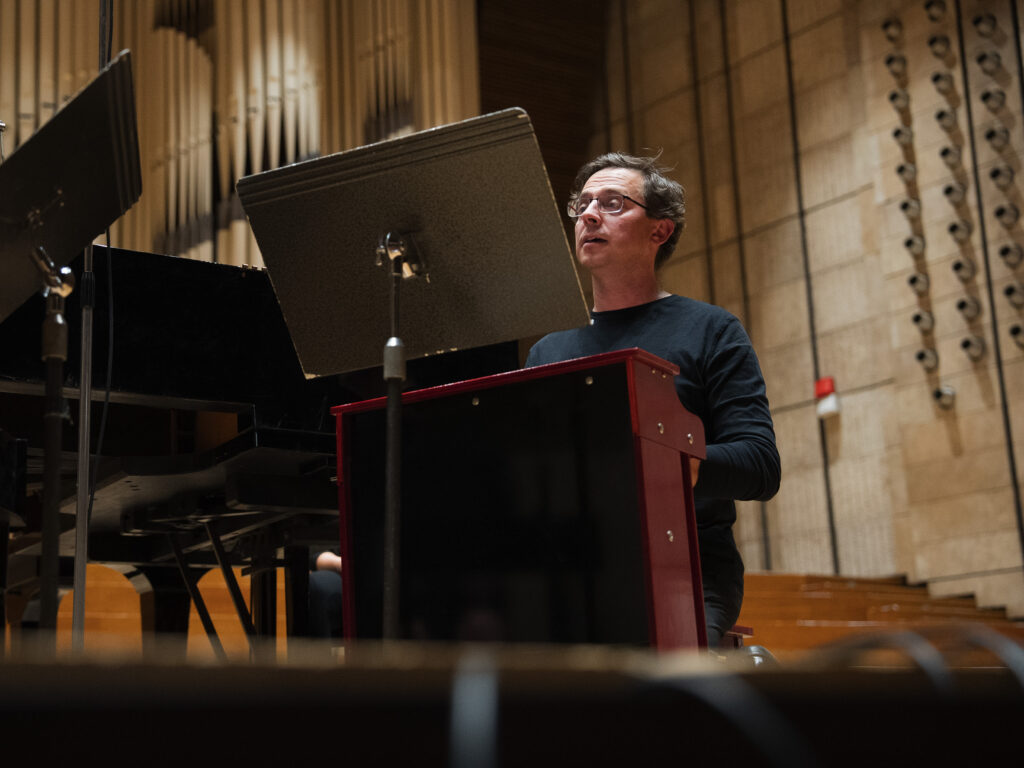
Finally came the miniature as toy. Tomáš Boroš’s second world premiere, For Two Toy Pianos, is a reduction not only of form but also of the instrument itself: both pianists moved from the concert grands to small toy pianos. At first, I. Šiller called out the notes aloud before playing them one by one, while T. Boroš accompanied him with chords. The image of a pupil at a lesson and an impatient classmate was unmistakable, which made the moment when the roles were reversed all the more effective. It was remarkable how tastefully the composer came to terms with the limitations of the instrument. The close belonged to Daniel Matej’s Always, the only work to forgo the small form. Out of resonances and repetitions, the piece builds into a single great arc, a story of deepening grief that ends not in a rupture but in acceptance. Sustaining such an arc after an entire evening of fine miniature work was the greatest test, but the pianists passed it through a patient pacing of dynamics. I. Šiller and T. Boroš played just as convincingly at two instruments as they did together at one.
Hana CHLEBÁKOVÁ