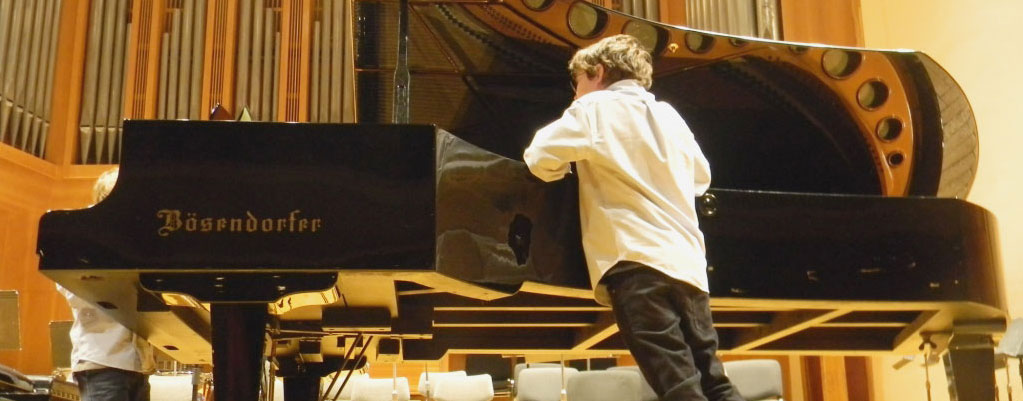
25 October 2025 – BRATISLAVA, Large Concert Studio of Slovak Radio
Concerts by Ensemble ricercata at Slovak Radio resemble, for regular listeners, a well-made television series. Each new instalment builds upon the previous ones while offering a different perspective. One of the most ambitious long-term projects in this regard is Ives 114, a concert series dedicated to the complete collection of Charles Ives’s songs. In autumn last year, pianist Ivan Šiller, together with soprano Helga Varga Bach and baritone Peter Kollár, presented the fourth concert of the series. As I was not able to attend the concert in person, the following reflections are based on listening to the concert recording.
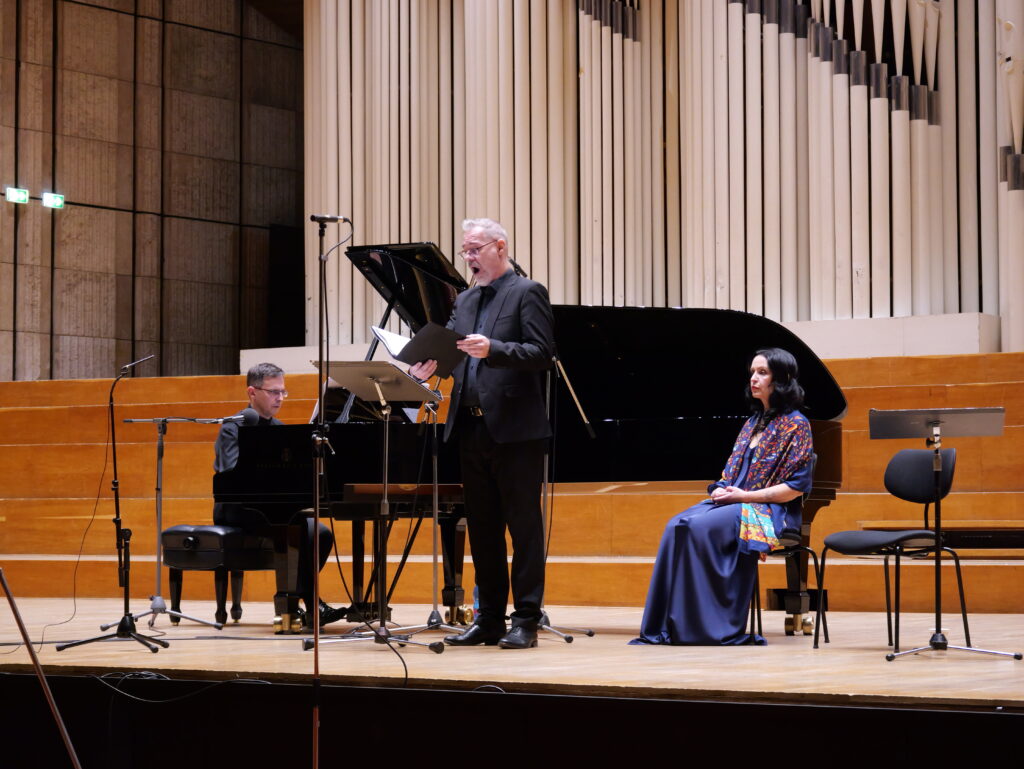
The strongest aspect of the entire concept is its educational dimension. Before each song, Šiller commented on and briefly analysed the piece that was about to be performed. He consistently pointed out a specific principle on which the song is built—whether harmonic thinking, rhythmic playfulness, work with text, or a particular compositional gesture. These remarks never slipped into dry analysis; on the contrary, they helped to orient the listener within Ives’s fragmented musical language. For someone who is not a devoted admirer of the song genre, this explanatory framework proved to be extremely helpful.
The programme opened with the songs From Paracelsus and Whittman. Both pieces reveal Ives’s interest in philosophical and spiritual topics and function more as condensed reflections than as traditional lyrical miniatures. Rather than foregrounding melody, they emphasise the relationship between voice and piano as equal partners in shaping meaning.
These were followed by The Side Show, Cradle Song, La fede, and the triptych August, September and December. This part of the programme juxtaposed irony, inwardness and contemplation. While The Side Show works with exaggeration and grotesque imagery, Cradle Song and La fede bring a calmer, more introspective atmosphere. The three short songs August, September and December form a compact unit characterised by restraint and a subtle sense of musical time.
The next section included Berceuse, Where the Eagle and Allegro. These songs further expanded the expressive palette of the programme and demonstrated Ives’s sensitivity to colour, gesture and condensed expression, despite their relatively small scale.
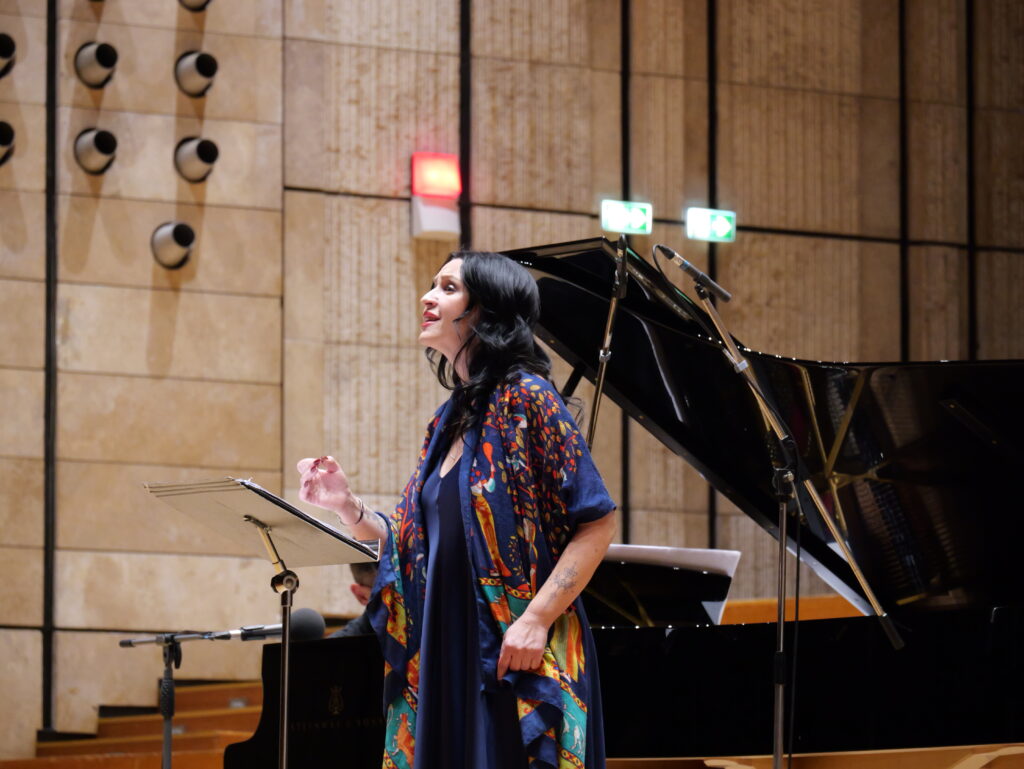
A separate block was devoted to songs inspired by the German Lied tradition: Weil auf mir, Du alte Mutter, Feldeinsamkeit and Ich grolle nicht. It is precisely in these pieces that one can most clearly observe the gradual emergence of Ives’s personal compositional voice. Familiar harmonic and expressive models are present, yet they are subtly disrupted and refracted through his unmistakable musical language.
The final part of the programme consisted of Naught That Country, Lincoln the Great Commoner and Charlie Rutlage. These songs engage with themes of the American myth and civic identity. Ives approaches his subjects without pathos or idealisation, often combining seriousness with irony and distance, which results in a highly distinctive expressive stance.
From an interpretative perspective, all three performers delivered a reliable and focused performance. These are experienced professionals from whom one naturally expects a technically secure and responsible execution. In Ives’s music, however, technical proficiency alone is not sufficient. Equally important are life experience and emotional intelligence, which allow performers to navigate abrupt stylistic shifts without forcing expressive coherence where none is intended.
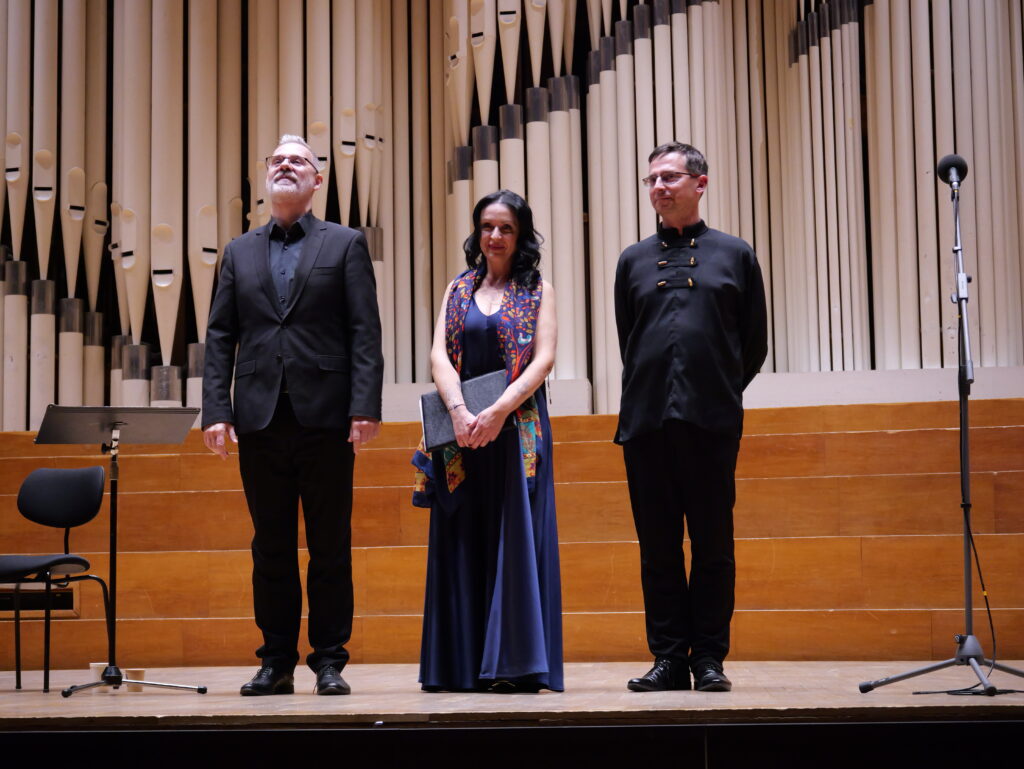
Listening to the concert in recorded form naturally shifts attention away from performative immediacy toward structure and concept. In this context, the educational framing of the evening emerges not as a supplementary feature, but as a central component of the Ives 114 project. The cycle thus functions not only as an interpretative undertaking, but also as a thoughtful guide through one of the most complex and internally contradictory figures of early twentieth-century music.
Jakub GOČ